Blog
FREE WEBINAR

Employee Engagement Software for Retail Companies

Retail floor performance is driven by the associate who decides, in the moment, whether to push the attachment item, whether to upsell the protection plan, and whether to engage the customer who looks like they're browsing. That decision happens at the point of interaction, not after a quarterly review. If your engagement program doesn't reach your associates in that moment — visibly, in real time — it's not influencing the behavior that drives your revenue.

Retail engagement is fundamentally different from sales team engagement because the relevant behavioral moment is so compressed. A B2B sales rep has hours or days to decide how to approach a deal. A retail associate has the two minutes of a customer interaction.

The engagement program that influences the second type of decision needs to operate at shift-level frequency — updating scores multiple times per day, reaching associates on their phones during breaks, and keeping the reward visible enough that it's present in the associate's mind when the attachment opportunity appears.

The Problem with Manual Incentive Management

Retail incentive programs built on spreadsheets are invisible to the people they're supposed to motivate. A store manager uploads weekly sales data on Monday, ops reconciles it by Wednesday, and associates hear about their incentive status — if they hear at all — in a huddle on Thursday. By then, four selling days have passed without anyone knowing where they stood.

Associates doing their own math on paper — tracking units sold, attachment rates, and their rough position versus the contest threshold — are spending mental energy on accounting instead of selling. High turnover makes the problem worse: a new associate who doesn't know the program exists doesn't benefit from it, and if the program is invisible, it's not reducing turnover either.

Multi-SKU promotion management creates specific challenges for retail incentive programs. A floor associate may be working on incentives for three or four concurrent promotions simultaneously — a vendor co-op for a specific brand, a house program for protection plans, an accessory attach contest, and a customer satisfaction bonus. Tracking all of these manually in a spreadsheet and presenting the combined picture to each associate is operationally complex.

The result is usually a simplified one-contest approach that sacrifices the behavioral specificity the business actually needs.

Accurate transaction attribution is difficult in retail environments with multiple associates working a shared floor. When a team of five floor staff is selling from the same inventory, attributing each transaction to the correct associate requires POS data at the associate level — which many retail systems capture but few incentive programs actually use. Manual programs often default to store-level averages, which reduces the motivational specificity that drives individual behavior.

District managers face their own version of the visibility problem. A district manager responsible for 15 stores who wants to understand how a vendor promotion is performing across her territory has to wait for each store manager to compile numbers, reconcile them in a spreadsheet, and email a summary. By the time she sees the picture, the promotion window may be half over and the opportunity to intervene has passed.

What Good Looks Like

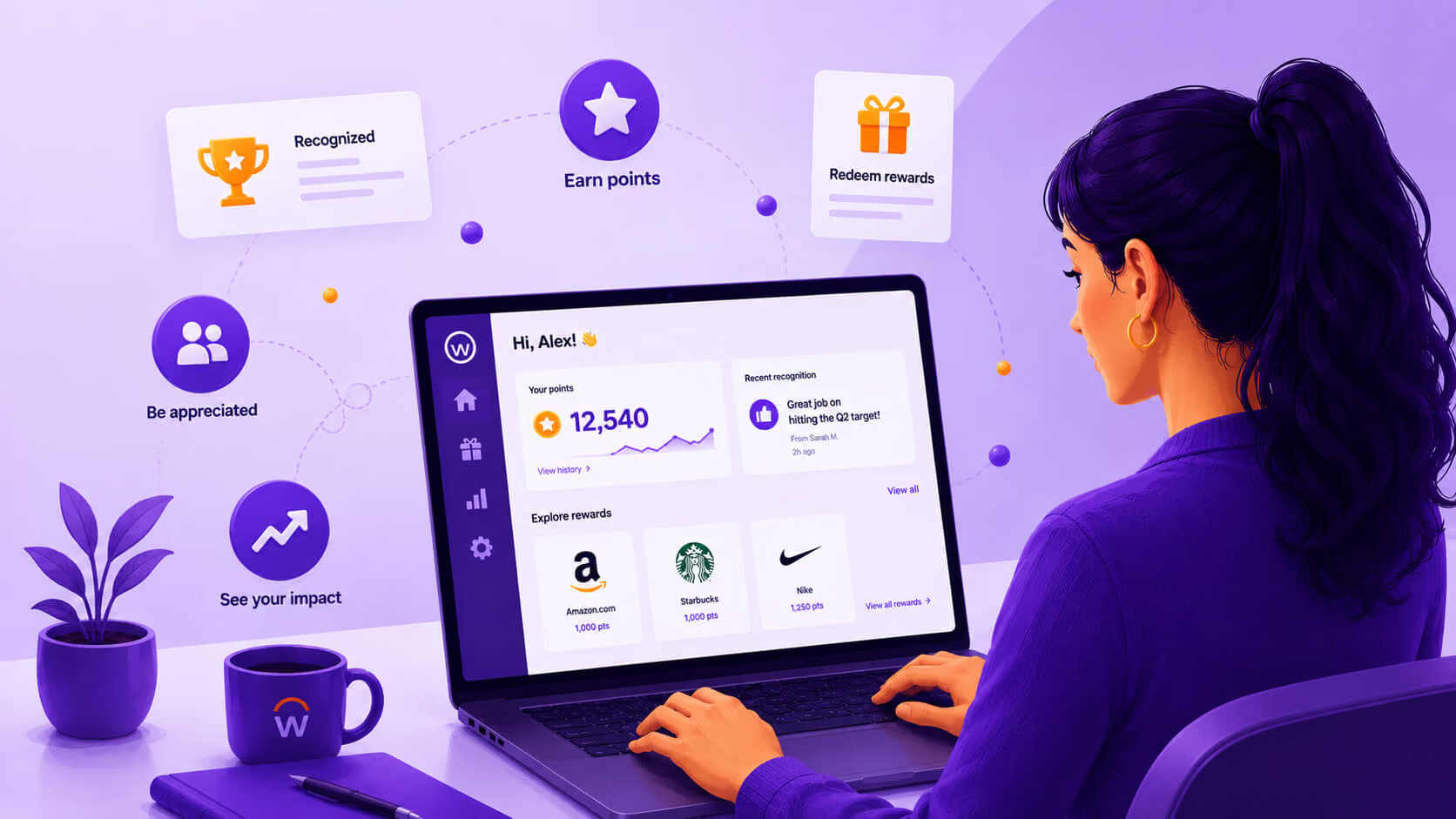
A well-run retail engagement program reaches every associate on the floor, in real time, through a channel they actually check. Every sale, every attachment, every protection plan adds to a visible points total that updates immediately. Associates see a leaderboard — store-level and district-level — that resets weekly so there's always a fresh reason to compete.

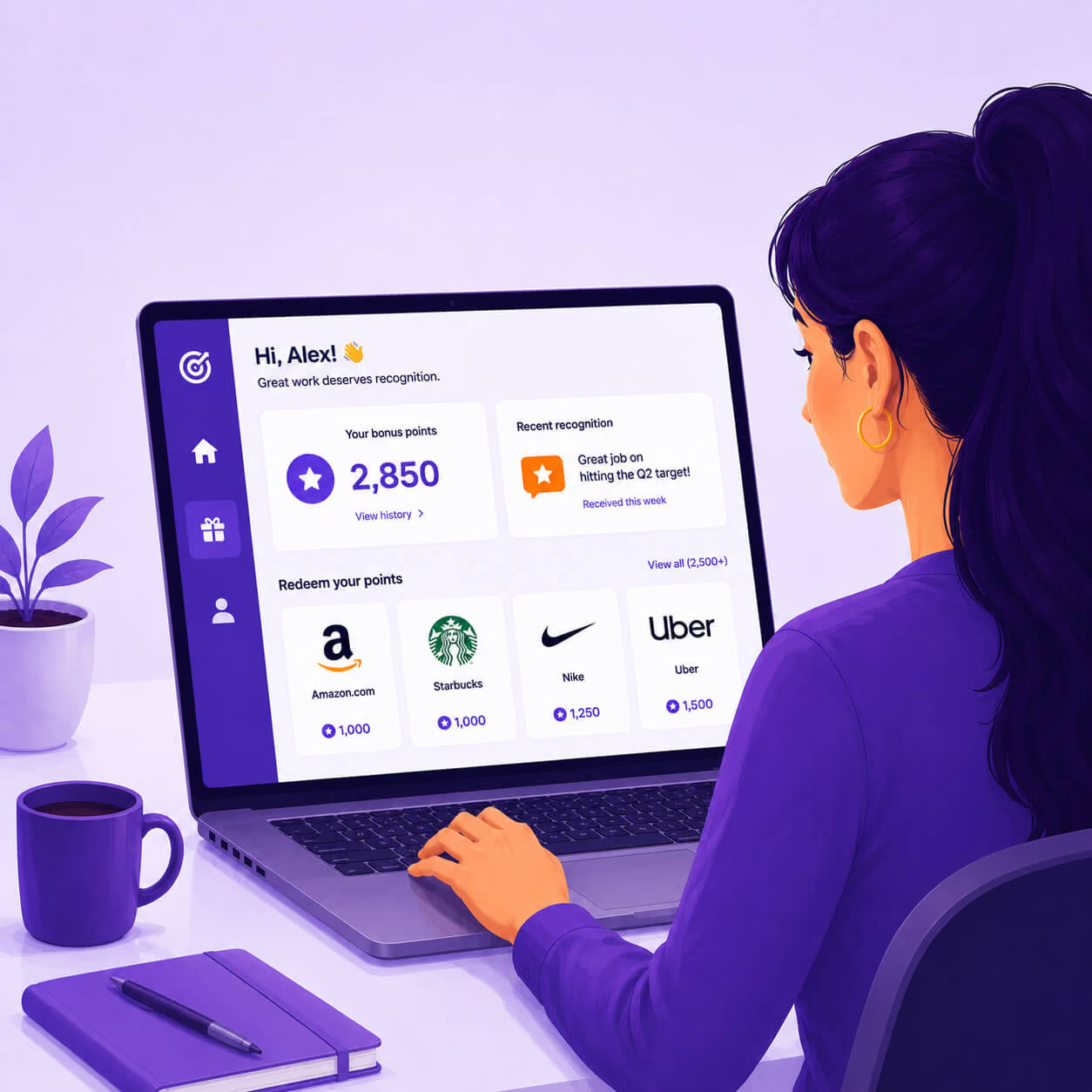
When someone hits a threshold, their reward is in their hands the same day: a digital gift card, a prepaid card, or a reward from a catalog of 2,500+ options they actually want. Managers see which SKUs, which associates, and which store locations are performing against the incentive goals — and which programs aren't moving the needle.

How Wink Solves This

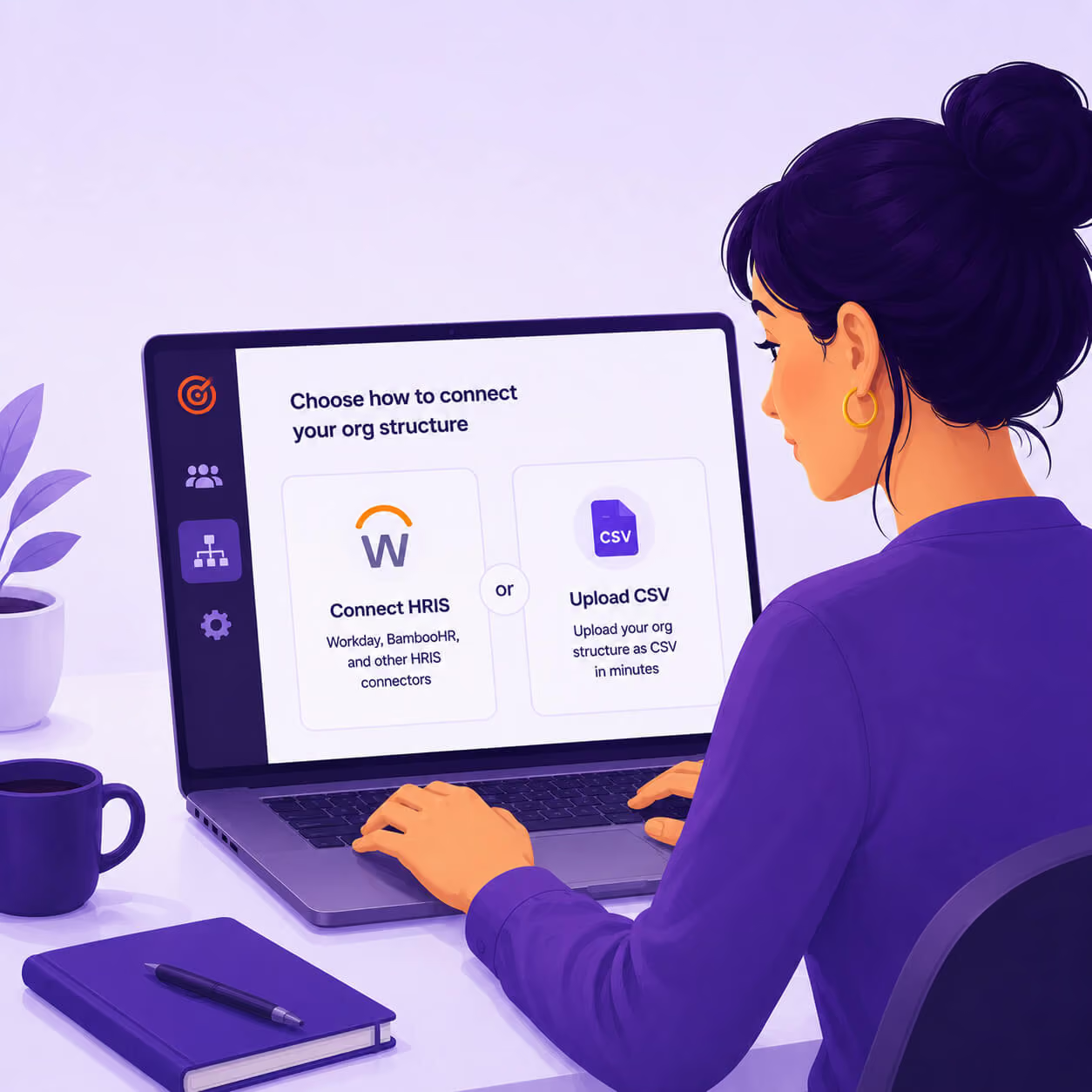
Wink connects to your POS system or sales data via API or CSV, turning each qualifying transaction into an immediate point award or cash bonus for the associate who made it happen. You configure your rules in the no-code builder — protection plan sale pays 100 points, premium product attachment pays 75, hitting weekly unit target pays a bonus 200 — and associates see their progress update in real time on their phones or on shared store displays.

Team challenges let you pit store against store or region against region, which builds culture while driving performance. When an associate hits a reward threshold, Wink fires the payout through the built-in rewards catalog automatically — digital delivery, minutes not days. Program managers can launch a flash contest for a new product line in hours, run it for a week, and measure exact impact on that SKU's sell-through rate.

Key Features for Retail

POS and Sales Data Integration

Connect transaction data directly to Wink so points post immediately after each qualifying sale, no manual upload required. Associate-level transaction attribution means each associate sees their own score, not a team average.

Mobile-First Associate Dashboard

Associates check their points, rank, and progress on their phones throughout the shift — turning engagement into a moment-by-moment driver. No app download required — any mobile browser works.

Store vs. Store Leaderboards

Pit locations against each other in team challenges to drive location-level culture and performance simultaneously. Regional managers see inter-store competition without manual aggregation.

Flash Contest Launch

Spin up a 48-hour contest for a new product or slow-moving SKU in minutes, with no IT dependency and no spreadsheet reconciliation afterward. Corporate-level flash contests push live to all locations simultaneously.

Instant Digital Rewards

Associates receive their rewards digitally within minutes of hitting a threshold — no manager voucher, no gift card inventory, no delay. A reward that arrives before the shift ends creates the social proof effect that drives program adoption.

Making the Business Case

The ROI of retail engagement software is most cleanly measured in SKU-level sell-through data: compare the sell-through rate on an incentivized product during an active contest period versus an equivalent period without a contest. Most retail managers who have run this comparison see 15-25% lift on incentivized SKUs during well-run programs. For a chain doing $20M in annual floor staff-influenced sales, a 20% lift during incentive periods that cover 60% of the calendar represents $2.4M in incremental sell-through per year.

The turnover argument is equally important. Retail turnover costs are significant — replacing a floor associate typically costs $3,000-5,000 in recruiting, onboarding, and lost productivity. A program that meaningfully improves associate engagement and makes the job feel more rewarding — through visible recognition, fast rewards, and a sense of competition — can reduce turnover even modestly.

A 5% improvement in retention across a 200-associate chain saves 10 replacement cycles per year, or $30,000-50,000 in direct costs.

If your associates don't know where they stand until Thursday's huddle, your engagement program is four selling days late every week. Start your free trial and have a live retail incentive running before the next product push, or book a demo to see how Wink drives floor-level behavior change.

Comparte este post