

What Are Incentive Programs and Why Do They Actually Work?
If you’ve ever felt like your team is "quiet quitting" or just going through the motions, you’ve likely looked for a spark to reignite their drive. Usually, that spark is an Incentive Program.
But what exactly constitutes an incentive program in 2026?
Is it just a year-end bonus, or is it something deeper?
Let’s break down the mechanics of motivation and why these programs are the secret sauce of high-performing companies.
Defining the "Incentive Program"
At its core, a workplace incentive program is a structured, formal scheme used to promote or encourage specific actions or behavior by a specific group of people during a defined period.
In simpler terms: It is a roadmap that tells your employees, "If you achieve X, we will reward you with Y."
3 Main flavors of Incentive
1. Financial Incentives:
Bonuses, profit sharing, stock options, or commission.
2. Non-Financial Incentives:
Extra PTO, flexible remote-work days, or "Employee of the Month" perks.
3. Experiential Incentives:
Team retreats, concert tickets, or high-end professional development courses.
Why They Work ?
It isn't just about "greed" or wanting more stuff. Incentive programs tap into fundamental human psychology. Here is why they are so effective:
1. The Dopamine Loop
When an employee receives a reward, the brain releases dopamine—the "feel-good" neurotransmitter. This creates a positive association with hard work. The brain begins to crave that sense of achievement, making high performance a self-sustaining habit.
2. The Power of "Expectancy Theory"
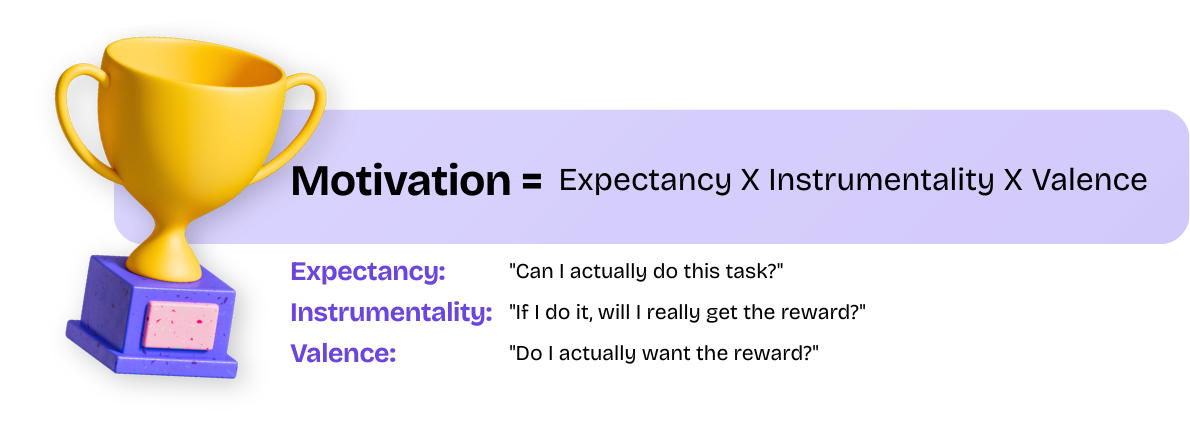
Psychologist Victor Vroom’s Expectancy Theory suggests that an individual will behave or act in a certain way because they are motivated to select a specific behavior over others due to what they expect the result of that selected behavior will be.
Essentially, motivation is a calculation :
3. Immediate Feedback vs. Delayed Gratification
In a standard job, the "reward" (a raise or promotion) might be a year away. Incentive programs provide micro-milestones. By shortening the feedback loop, you keep the momentum alive throughout the entire year, not just during annual reviews.
Why Structure Matters
An incentive program only works if it is consistent and visible. A "random" bonus given at the boss’s whim isn't an incentive; it’s a surprise.
True incentive programs work because they provide psychological safety. Employees know exactly what the "win conditions" are. When the goalposts don't move, trust in leadership goes up, and stress levels go down.
Is Your Team Ready?
Before launching a program, ask yourself: Are my goals clear?
A program without clear metrics is just a gift-giving circle.
Using a platform like Wink Suite allows you to track these metrics in real-time, ensuring that when a goal is hit, the celebration is immediate and earned.

Discover Wink Suite’s solutions today → Mix ’n Match mechanics
Let's grow together in digital engagement → Partnerships Program
LOVE TO CHAT AND CHILL ? → Book a demo
